The Ultimate Pamukkale Travel Guide: How to Visit the Travertines and Hierapolis
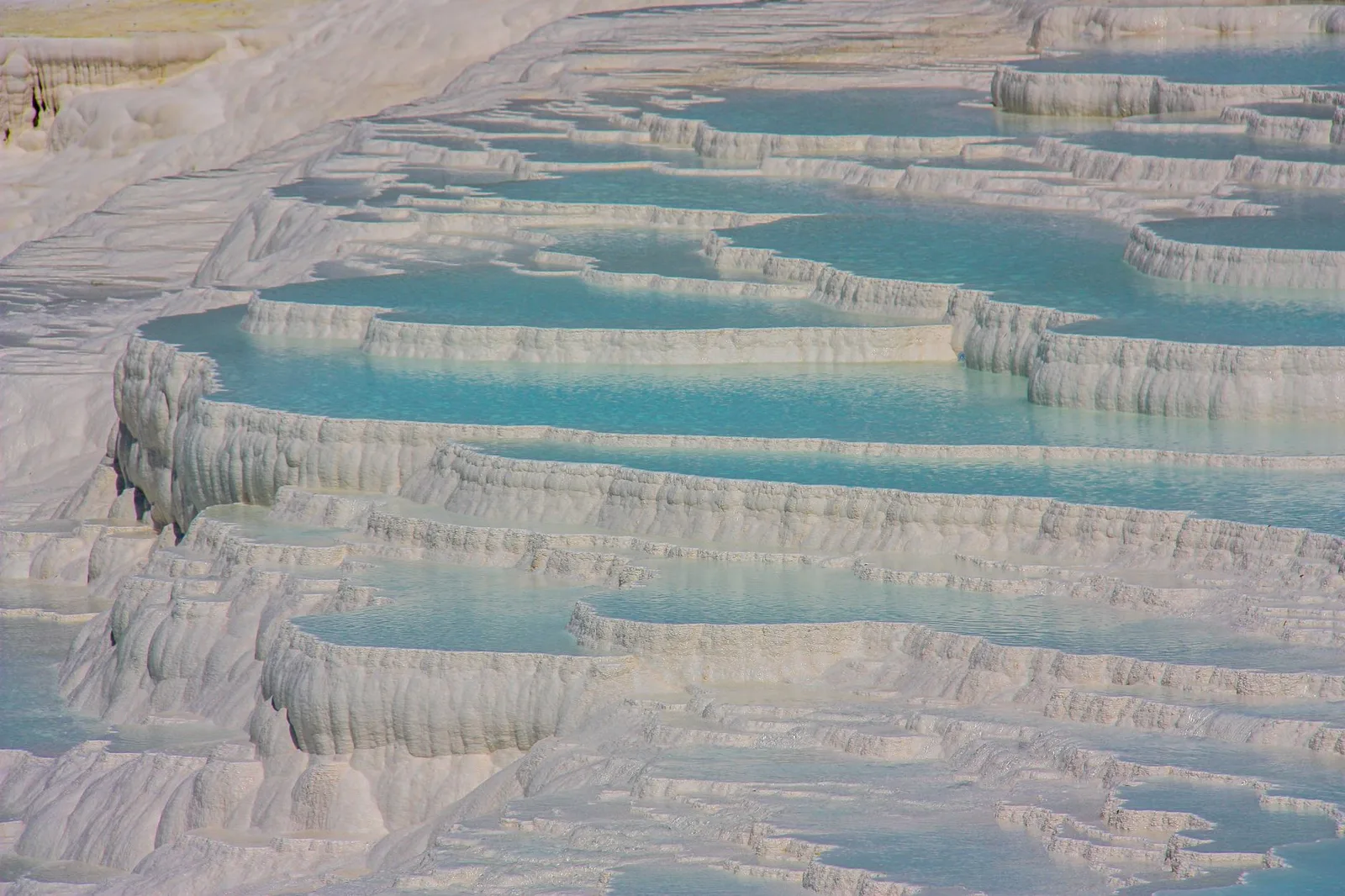
Known globally for its cascading white terraces of carbonate minerals, Pamukkale is one of the most visited geological wonders in Turkey. Literally translating to "Cotton Castle" in Turkish, this natural site has drawn visitors since classical antiquity, when the Romans established the spa city of Hierapolis atop the hot springs. Today, travelers flock to southwestern Turkey to walk along the calcium travertines, swim in thermal waters, and explore sprawling archaeological ruins. Navigating this dual attraction requires careful planning, as midday crowds, strict foot traffic regulations, and vast walking distances can easily derail your experience. This comprehensive Pamukkale travel guide provides the practical logistics, historical context, and routing strategies you need to make the most of your visit.
Contents
Key Takeaways
- Enter through the South Gate early in the morning to access the Hierapolis ruins before the tour buses arrive at the main travertine path.
- You must remove your shoes to walk on the white travertine terraces; pack a lightweight drawstring bag to carry your footwear.
- Allocate at least four to five hours to explore both the geological formations and the extensive archaeological site of Hierapolis.
- Combine your visit with an AI-driven routing tool like Routevia to seamlessly connect Pamukkale with neighboring destinations like Ephesus or Salda Lake.
Understanding the Geography of Pamukkale and Hierapolis
To plan an efficient itinerary, you must first understand that Pamukkale and the ancient city of Hierapolis occupy the exact same physical site. They are managed under a single admission ticket, meaning you cannot visit one without having access to the other. The entire complex sits on a hill overlooking the modern town of Pamukkale, located in the Denizli Province of Turkey.
The Three Entrance Gates
Visitors can access the site through three distinct entry points, each offering a different starting experience:
- The Town Entrance (Gate 3): Located at the foot of the hill in Pamukkale town. This entrance leads you directly onto the travertine path. Entering here means you must walk uphill on the bare-foot travertine slope to reach the ruins at the top.
- The North Gate: This entrance is situated near the ancient northern necropolis. Choosing this gate requires a long walk of approximately two kilometers past ancient tombs and ruins before you reach the main travertine pools.
- The South Gate: Located at the top of the plateau. This is highly recommended for independent travelers. It provides immediate access to the archaeological ruins of Hierapolis and allows you to approach the travertines from above, avoiding an uphill climb.
Navigating the Walking Distances
The archaeological zone of Hierapolis is vast, stretching over two kilometers from north to south. The terrain is uneven, dusty, and largely unshaded. Walking from the theater to the Cleopatra Antique Pool, and then down the travertine terraces, requires reasonable physical mobility. Visitors traveling with small children or those with limited mobility should consider utilizing the paid shuttle golf carts available near the South Gate and the archaeological museum.
How to Explore the Travertine Terraces
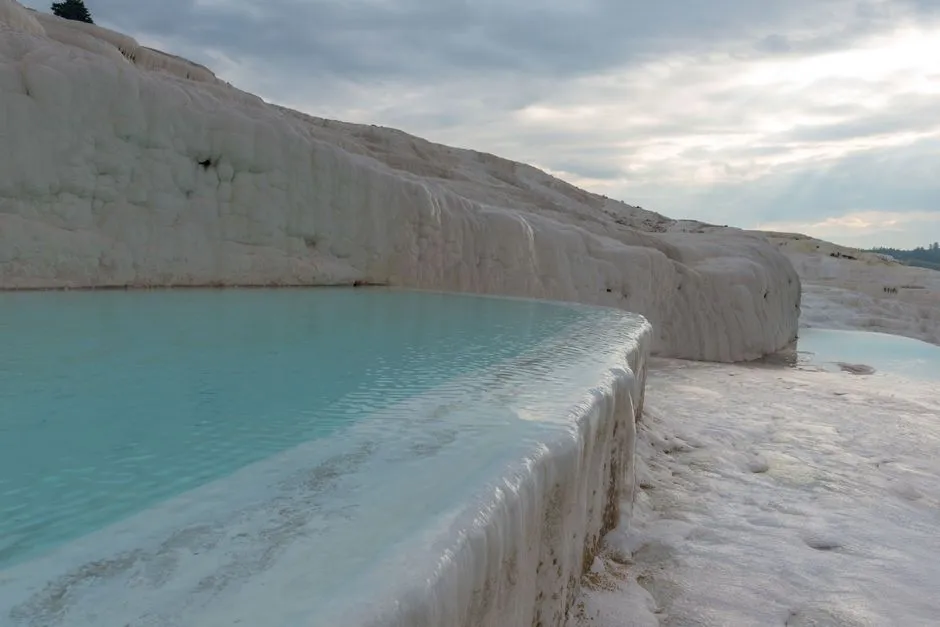
The iconic white terraces of Pamukkale were formed over millennia as mineral-rich hot springs cooled and deposited calcium carbonate on the hillside. To preserve this delicate geological structure, local authorities have implemented strict conservation rules that all visitors must follow.
The Footwear Policy on the Terraces
To prevent staining and erosion of the white calcium deposits, shoes, sandals, and even socks are strictly prohibited on the main travertine path. You must walk completely barefoot. The surface can be surprisingly rough, sharp, and slippery in areas where water flows continuously. Carrying your shoes in your hands for the entire walk can be cumbersome, so bringing a backpack or a lightweight bag is essential.
Water Levels and Seasonal Variations
A common disappointment among travelers is finding many of the natural pools dry. The flow of the thermal water is controlled artificially by local authorities to distribute minerals evenly and prevent algae growth. Consequently, different sections of the terraces are watered on a rotating schedule. The artificial pools constructed along the main walking path, however, are kept filled year-round for visitors to wade in.
Routevia shows you the best places to visit across Türkiye city by city, then plans an AI-powered route in seconds.
Exploring the Ancient City of Hierapolis
While the white terraces dominate social media, the ruins of Hierapolis are equally spectacular. Founded as a thermal spa by the Seleucid Empire in the 2nd century BC, the city later became a prominent Roman and Byzantine center. You can learn more about its historical significance on the Wikipedia page for Hierapolis.
The Roman Theater
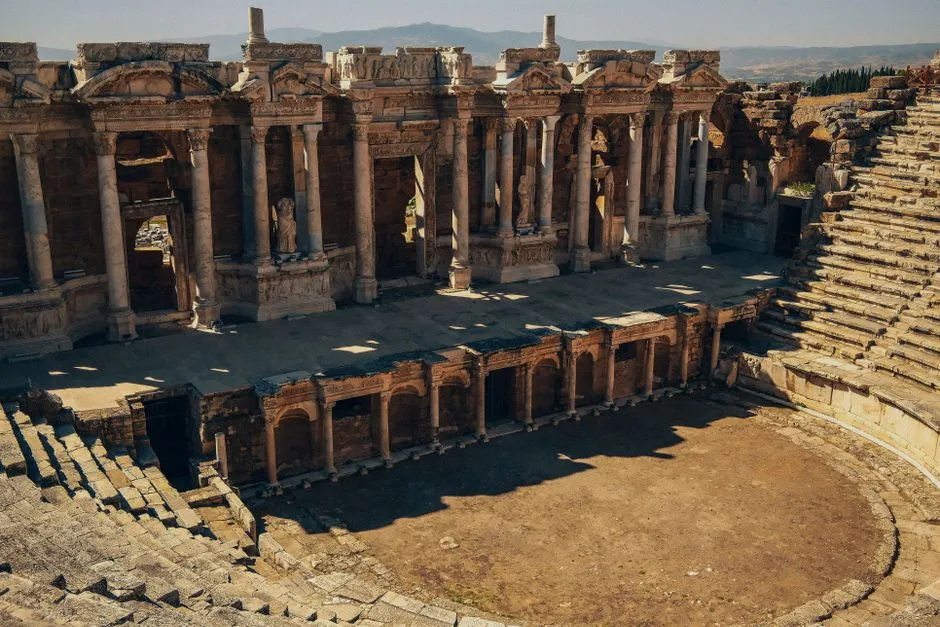
The undisputed highlight of the ruins is the theater of Hierapolis. Built during the reigns of Hadrian and Septimius Severus, it is exceptionally well-preserved. The theater could once hold up to 15,000 spectators and features an ornate architectural facade decorated with mythological reliefs. Reaching the theater requires a short, uphill hike from the Cleopatra Pool, but the panoramic views of the surrounding valley make it worthwhile.
The Necropolis
Stretching for over two kilometers outside the ancient city walls, the Necropolis of Hierapolis is one of the largest and best-preserved ancient cemeteries in Turkey. It contains over 1,200 tombs, ranging from simple sarcophagi to grand family tumuli. Walking through this silent stone landscape offers a profound glimpse into the burial customs of the Hellenistic, Roman, and early Christian eras.
The Antique Pool (Cleopatra's Pool)
Located at the center of the complex, this modern facility is built over the original Roman thermal baths. The pool contains warm, mineral-rich water heated by geothermal activity to a constant 36 degrees Celsius (97 degrees Fahrenheit). What makes the pool unique are the genuine Roman columns and marble fragments submerged at the bottom, which fell during an earthquake in the 7th century AD. While entering the facility is free, swimming among the ruins requires an additional ticket.
Common Mistakes to Avoid
Many travelers leave Pamukkale underwhelmed due to poor planning or unrealistic expectations. Avoid these common pitfalls to ensure a smooth trip:
- Arriving at midday: Tour buses from coastal resorts like Antalya and Bodrum arrive between 11:00 AM and 3:00 PM, flooding the site with thousands of visitors. The Fix: Arrive at 8:00 AM when the gates open, or visit in the late afternoon to experience the sunset.
- Forgetting a bag for your shoes: Carrying shoes in your hands while trying to balance on wet, slippery travertine slopes is difficult and unsafe. The Fix: Bring a lightweight backpack or drawstring bag to store your footwear.
- Expecting all natural pools to be full: Water distribution is rotated to protect the site, meaning many terraces will be dry during your visit. The Fix: Manage your expectations and focus on the designated swimming pools along the main path.
- Neglecting sun protection: The white calcium terraces reflect intense sunlight, and there is virtually no shade across the Hierapolis archaeological site. The Fix: Wear high-SPF sunscreen, a wide-brimmed hat, and polarized sunglasses to protect your eyes from the glare.
- Underestimating the time required: Trying to rush through the site in two hours means you will miss the theater, the museum, and the northern necropolis. The Fix: Allocate a minimum of four hours, or a full half-day, to explore both the nature and history comfortably.
Transit and Logistics for Your Visit
Pamukkale is located in the Denizli Province. The nearest airport is Denizli Çardak Airport (DNZ), which receives daily flights from Istanbul. From the airport, you can take a shared shuttle service or rent a car to reach Pamukkale town, which is roughly an hour's drive away.
Using Public Transport from Denizli
If you arrive at the Denizli central bus station (Otogar) via intercity bus or train, head to the lower level (Platform 76) to catch a local minibus (dolmuş) to Pamukkale. These minibuses run every 15 to 20 minutes and drop passengers off in the center of Pamukkale town, directly below the travertine terraces.
Incorporating Pamukkale into a Broader Turkey Itinerary
Pamukkale is rarely a standalone destination; it is usually visited as a transit stop between Istanbul, Cappadocia, Ephesus, or the Aegean coast. Organizing these connections can be logistically challenging due to varying bus schedules and driving distances. Utilizing an intelligent digital tool like Routevia can help you plan optimized driving routes, locate points of interest along the way, and build a cohesive travel plan that maximizes your time in Turkey.
Frequently Asked Questions
Can you swim in the white travertine pools of Pamukkale?
Yes, you can wade and sit in the artificial pools built along the main pedestrian path running down the cliffside. However, the delicate, historic natural terraces located off the path are strictly closed to swimming to protect them from erosion and pollution.
How much time do I need to visit Pamukkale and Hierapolis?
You should plan to spend between four and five hours at the site. This allows enough time to walk down the travertine path, explore the Roman theater and the Necropolis, visit the archaeological museum, and swim in the Cleopatra Antique Pool without rushing.
What is the best time of year to visit Pamukkale?
The best times to visit are during the shoulder seasons of spring (April to June) and autumn (September to October). During these months, the weather is pleasant for walking, avoiding the scorching heat of July and August and the cold winds of winter.
Is Pamukkale suitable for travelers with mobility issues?
The travertine path is not wheelchair accessible and can be challenging for those with limited mobility due to the slippery, uneven barefoot terrain. However, the flat upper plateau of Hierapolis, including the Cleopatra Pool and the museum, can be accessed via wheelchair-friendly paths from the South Gate, and electric golf cart rentals are available on-site.
Visiting Pamukkale offers a rare opportunity to witness a unique natural phenomenon and walk through a remarkably preserved Greco-Roman spa city. By arriving early, understanding the logistical layout of the gates, and preparing for the physical environment, you can enjoy a seamless and enriching experience at this iconic Turkish landmark.

Independent Full Stack Developer · Founder of Tabserve
Aycan builds and maintains Tabserve's apps — OneBag, Routevia and RentFlow — and writes practical, tested guides to help you pack smarter, travel better and manage rentals with less hassle.