The Ultimate Winter Travel Packing List: Layering Secrets & Carry-On Only Tips
Contents
The Challenge of Cold-Weather Packing
Packing for a cold-weather getaway can quickly turn into a logistical headache. Unlike summer vacations where ten outfits can easily fit into a backpack, winter gear is inherently bulky. Heavy sweaters, thick coats, and insulated boots threaten to push your luggage over airline weight limits before you even pack your toiletries.
However, traveling light in freezing temperatures is entirely possible. By mastering a strategic winter travel packing list and understanding the science of clothing insulation, you can comfortably fit everything you need into a single carry-on bag. Here is how to pack smart, stay warm, and bypass the baggage carousel.
The Core Strategy: The Three-Layer Rule
To stay warm without packing your entire wardrobe, you need to rely on a technical layering system. Instead of bringing multiple heavy sweaters, pack lightweight pieces that trap heat when worn together. This approach saves massive amounts of luggage space while offering versatility for changing weather conditions.
1. The Base Layer (Moisture Management)
The foundation of your winter wardrobe is the base layer, often called thermal underwear. This layer sits directly against your skin. Its primary job is to wick moisture away from your body so you do not get chilled by your own sweat. Look for materials like merino wool or high-quality synthetics. Avoid cotton entirely, as it retains moisture and loses its insulating properties when wet.
2. The Middle Layer (Heat Retention)
The middle layer is designed to trap the warm air generated by your body. Excellent options for your middle layer include:
- Lightweight fleece jackets
- Merino wool sweaters
- Packable down sweaters or synthetic down vests
Down is incredibly compressible, making it the ultimate space-saver for a carry-on-only winter travel packing list.
3. The Outer Layer (Weather Protection)
Your outer layer, or shell, protects you from wind, rain, and snow. It does not need to be heavily insulated if your base and middle layers are doing their jobs. A waterproof, windproof jacket with a hood is essential. For urban travel, a classic wool overcoat works well, but you should wear this on the plane to save suitcase space.
Smart Footwear and Accessory Strategies
Shoes and accessories are often where travelers overpack. To keep your bag light, limit yourself to two pairs of shoes maximum.
Choosing the Right Boots
Wear your heaviest, bulkiest boots on the plane. Pack a lighter pair of shoes, like stylish sneakers or flats, in your bag for indoor wear or warmer days. Ensure your primary winter boots are waterproof and have good traction to handle icy sidewalks. You can read more about safety guidelines for winter conditions via the Wikipedia guide on hypothermia and cold-weather safety.
The Essential "Warmth Trio"
Do not underestimate the power of accessories. They take up very little space but make a massive difference in your comfort level. Always pack:
- A high-quality beanie that covers your ears
- Fleece-lined gloves or mittens
- A windproof scarf or neck gaiter
OneBag builds a smart carry-on packing list for your exact trip and tracks your bag's weight against 80+ airlines' limits — so you never forget an essential or pay an overweight fee.
How to Fit Winter Gear into a Carry-On
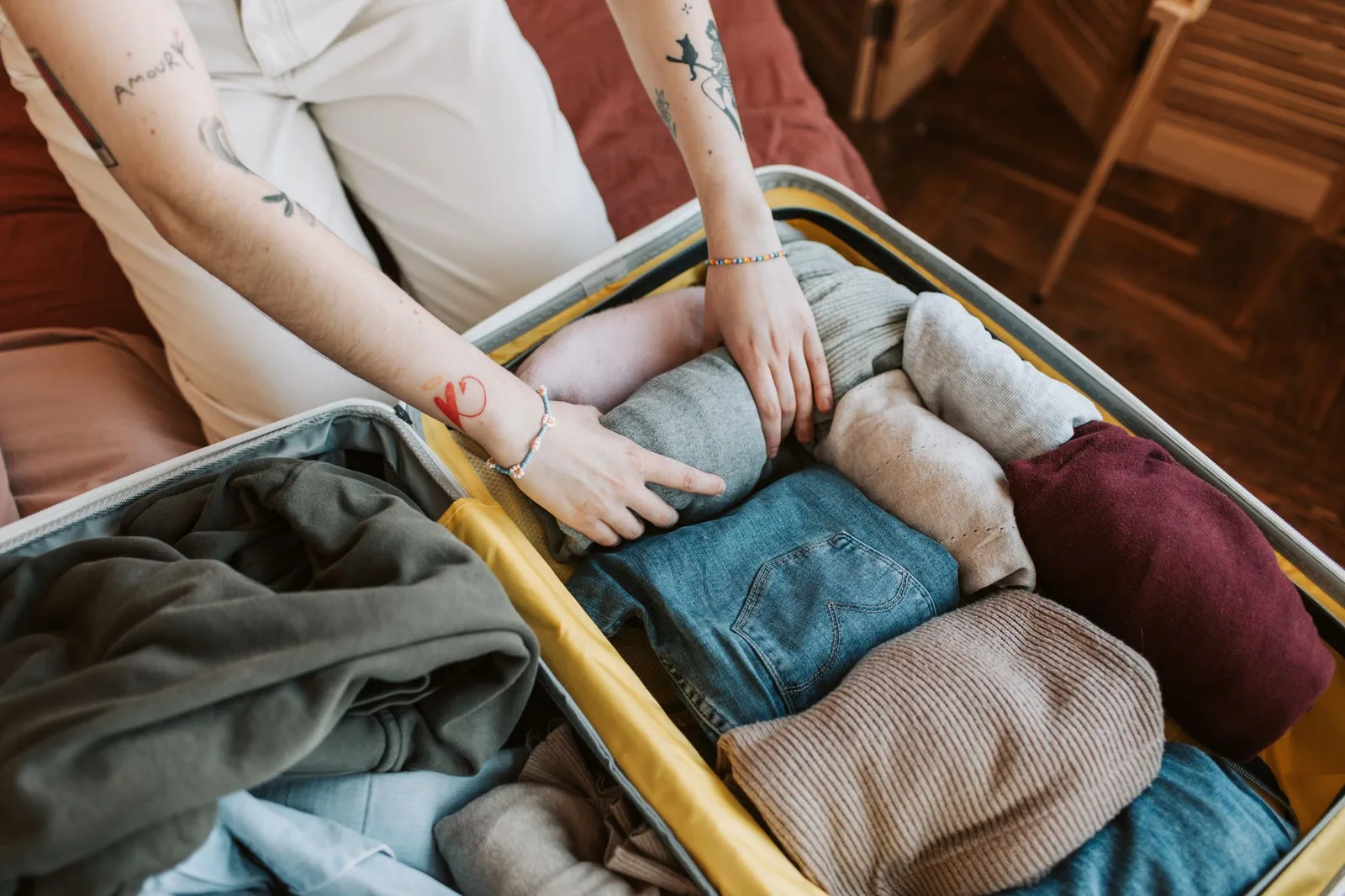
Once you have selected your gear, the next hurdle is fitting it into a standard carry-on suitcase. This requires tactical packing techniques.
Compression Bags vs. Rolling
While rolling clothes is great for summer t-shirts, bulky winter knits benefit greatly from compression sacks. Double-sided packing cubes can also help compress fluffy items down to half their original volume.
Maximizing Dead Space
Never leave the inside of your shoes empty. Stuff your socks, underwear, and chargers inside your packed shoes to utilize every square inch of your bag. Wrap your breakables in your thickest sweaters for added protection.
Navigating Airline Weight Limits
Many budget airlines have strict weight limits for carry-on bags, sometimes as low as 7kg (15 lbs). Since winter clothing is naturally heavier, your bag can easily exceed these limits even if it fits the physical dimensions.
Wear Your Heaviest Items
The golden rule of winter travel is to wear your bulkiest items on transit days. Wear your heaviest boots, your thickest sweater, and your bulkiest winter coat onto the plane. Once on board, you can place your coat in the overhead bin or use it as a blanket.
Track Your Packing Weight Digitally
Before you head to the airport, it is crucial to know exactly what your bag weighs. Using a dedicated travel packing app with an integrated weight tracker can save you expensive gate-checking fees. By logging your items digitally, you can see exactly where you can cut weight before you zip the bag closed. For official luggage size and weight regulations, check your specific airline's baggage guidelines or consult the International Air Transport Association (IATA) homepage for general industry standards.


Ready for Your Winter Adventure
A successful cold-weather trip starts with a smart, streamlined winter travel packing list. By focusing on high-quality layers, wearing your bulkiest gear on the plane, and keeping a close eye on your luggage weight, you can enjoy the snowy landscapes without the burden of heavy bags. Pack smart, stay warm, and enjoy the journey.

Independent Full Stack Developer · Founder of Tabserve
Aycan builds and maintains Tabserve's apps — OneBag, Routevia and RentFlow — and writes practical, tested guides to help you pack smarter, travel better and manage rentals with less hassle.