The Ultimate Fethiye Travel Guide: Paragliding, Oludeniz, and Coastal Route Planning
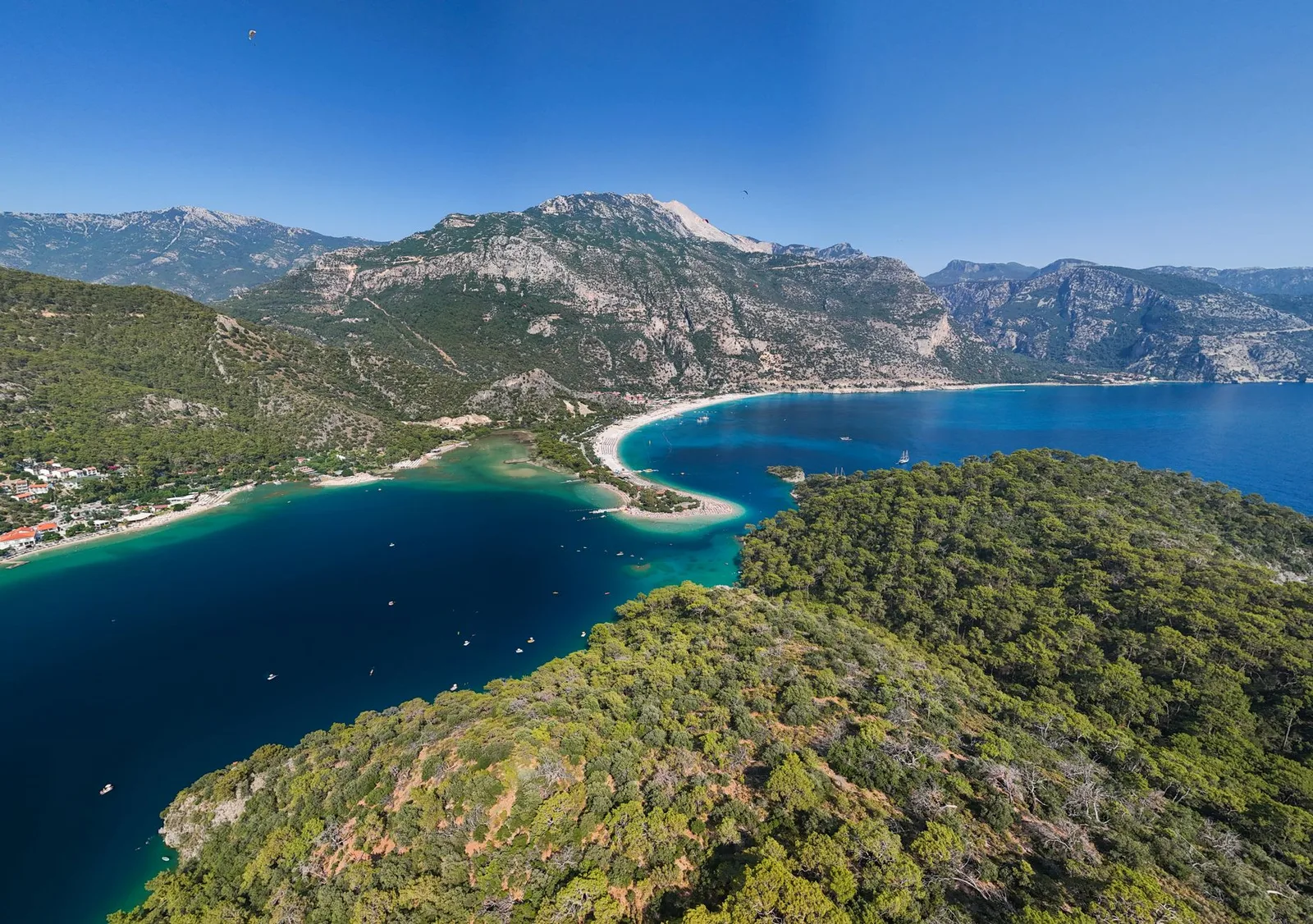
This comprehensive Fethiye travel guide details how to navigate Turkey's premier coastal adventure hub, from the heights of Babadag mountain to the sheltered waters of Oludeniz. Learn how to schedule your tandem paragliding flight, coordinate local dolmus transport, and explore ancient Lycian ruins without the crowds. Discover optimized 1-day and 2-day itineraries designed to help you maximize your time along the Turquoise Coast.
Fethiye represents a unique junction on Turkey’s southwest coast where the pine-clad Taurus Mountains plunge directly into the clear waters of the Mediterranean. Historically known as the ancient Lycian city of Telmessos, modern Fethiye has evolved into a vibrant port city that serves as the western gateway to the Turkish Riviera. Unlike purpose-built resort towns, Fethiye maintains a working harbor, a bustling central market, and a year-round local population, making it an authentic base for exploring the surrounding coastline.
Contents
- Key Takeaways
- Understanding Fethiye’s Geography and Neighborhoods
- The Logistics of Oludeniz Paragliding
- Exploring the Coastal Wonders and Hidden Coves
- Comparing Fethiye's Best Beaches and Coves
- Historical and Cultural Excursions
- Sample Itineraries
- Best Photo and Sunset Spots
- Common Mistakes to Avoid
- Frequently Asked Questions
Key Takeaways
- Book paragliding slots for the 08:30 or 11:00 launches to secure the clearest atmospheric conditions and avoid afternoon haze.
- Use the local dolmus (minibus) network departing from the Fethiye Otogar to reach Oludeniz, Kayakoy, and Kabak cheaply and efficiently.
- Combine your visit to the Blue Lagoon with an early morning hike through the abandoned stone houses of Kayakoy Ghost Village.
- Download an interactive routing tool like Routevia to map out winding coastal drives and coordinate local transport schedules seamlessly.
Understanding Fethiye’s Geography and Neighborhoods
To plan an efficient trip, you must first understand how Fethiye is laid out. The region is highly decentralized, meaning that key attractions, beaches, and historical sites are spread across several distinct areas separated by rocky peninsulas and mountain ridges.
Fethiye Town Center (Kordon and Paspatur)
The heart of the municipality is centered around the harbor (Kordon) and the historic old town, known as Paspatur. Here, narrow, shaded streets are lined with traditional wooden-balconied buildings, carpet shops, and spice stalls. The town center is the administrative and transit hub of the region, housing the main bus terminal (Otogar) and the starting point for most daily boat tours. While there are no swimming beaches directly in the town center, it offers the most diverse dining options and budget-friendly guesthouses.
Calis Beach (Calis Plaji)
Located roughly five kilometers north of the town center, Calis is a flat, sandy-pebble beach stretch that runs for several kilometers. It is famous for its windsurfing conditions and unobstructed sunset views. Calis is lined with a pedestrian promenade packed with hotels, cafes, and restaurants. It is highly accessible via a regular water taxi that runs between the Fethiye harbor and the Calis canal.
Oludeniz (The Blue Lagoon and Belcekiz Beach)
Situated 12 kilometers south of Fethiye behind a steep mountain pass, Oludeniz is the region's primary tourism magnet. It consists of two main water bodies: Belcekiz Beach, which is the long, wave-swept public beach where paragliders land, and the inner Blue Lagoon (Lulu Deniz), a still, protected national park area with shallow, emerald waters. Accommodation here is generally more expensive and heavily geared toward international holidaymakers.
The Logistics of Oludeniz Paragliding
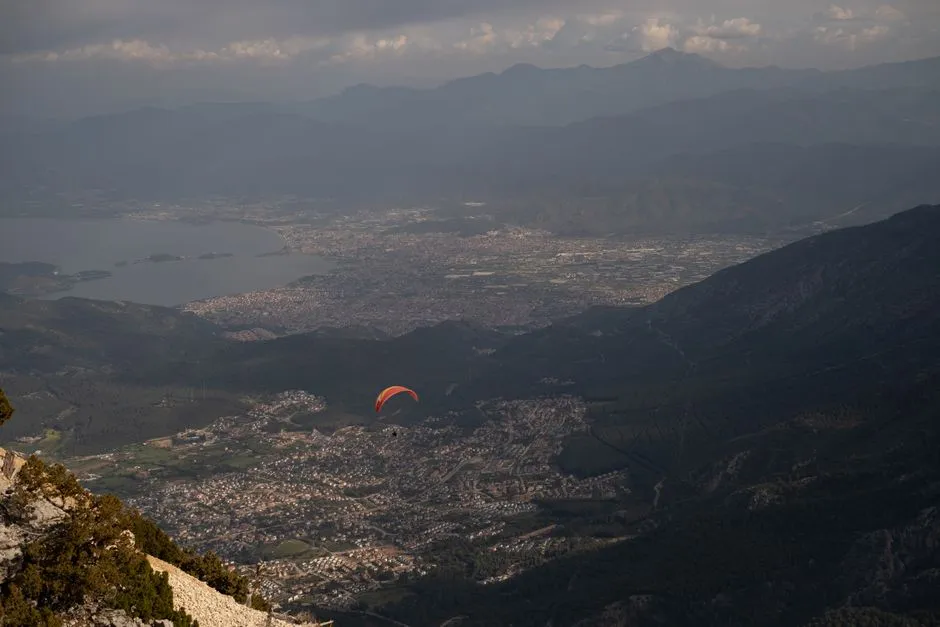
Paragliding from the summit of Babadag Mountain down to the sands of Oludeniz is widely considered one of the premier tandem paragliding experiences in the world. The mountain rises directly from sea level to an elevation of nearly 2,000 meters, creating thermal currents that allow for exceptionally long flight times and panoramic views of the Lycian coast.
Choosing Your Flight Time
Flights operate throughout the day, typically starting at 08:30 and running every two hours until sunset. Selecting the right slot depends on your personal preferences:
- The Morning Slots (08:30 & 11:00): These flights offer the clearest visibility and the calmest air. If you want to see the distinct shades of blue in the lagoon without atmospheric haze or glare, the mid-morning slot is optimal.
- The Afternoon Slots (13:30 & 15:30): As the land heats up, thermal currents become stronger. This allows pilots to fly higher and perform more acrobatic maneuvers if requested, though the air can be slightly bumpier.
- The Sunset Slot: Offers dramatic warm lighting over the water, but visibility of the underwater reef structures in the lagoon is reduced due to the low angle of the sun.
Safety, Standards, and Booking
All commercial tandem pilots in Fethiye must be certified by the Turkish Aeronautical Association (Turk Hava Kurumu) and possess extensive flight hours. When booking, do not simply select the cheapest operator on the beach. Inquire about the pilot’s experience, liability insurance coverage, and the age of the equipment. The flight itself lasts between 25 to 45 minutes depending on wind conditions, but you should budget three hours in total to account for the drive up the mountain and safety briefings.
The Babadag Teleferik (Cable Car)
Historically, reaching the launch pads required a bumpy 45-minute drive up a dirt road. Today, the Babadag Teleferik (cable car system) transports visitors from the base station in Oludeniz up to the 1,200-meter, 1,700-meter, and 1,900-meter stations. Even if you are not paragliding, taking the cable car up to watch the launches and view the sunset from the observation decks is a highly recommended afternoon activity.

Exploring the Coastal Wonders and Hidden Coves
Fethiye's coastline is highly indented, punctuated by deep canyons, sheer cliffs, and isolated beaches that are often inaccessible by standard road vehicles. Exploring these coastal pockets requires a mix of hiking, boat travel, and light off-road driving.
The Blue Lagoon National Park
The inner lagoon is a strictly protected nature reserve. While Belcekiz Beach is free to access, entering the inner lagoon park requires a small admission fee. The water here is remarkably calm, making it ideal for families with young children and paddleboarders. To escape the crowds, walk past the main sandy spit to the northern shoreline, where pine trees grow right down to the water's edge, offering natural shade.
Butterfly Valley (Kelebekler Vadisi)
This striking canyon features sheer rock walls reaching up to 350 meters high, terminating at a small, pebbly beach. The valley is named after the diverse butterfly species, including the Jersey Tiger, that breed here in the humid depths of the canyon. Note on safety: The trail leading down from the clifftop village of Faralya is extremely steep, rocky, and secured only by worn ropes. It is highly discouraged for inexperienced hikers. The safest and most practical way to visit Butterfly Valley is by taking one of the regular shuttle boats that depart from Oludeniz beach every morning.
Kabak Bay
Located further south along the coast, Kabak is a secluded, bohemian haven favored by backpackers, hikers, and those seeking yoga retreats. The bay is surrounded by dense pine forests and is largely free of large-scale resort developments. Standard vehicles cannot descend the steep dirt track from Kabak village down to the beach; visitors must either hike down (approximately 30 minutes) or ride in one of the communal 4x4 shuttle vehicles operated by the local cooperative.
Comparing Fethiye's Best Beaches and Coves
To help you decide where to spend your beach days, this table compares the primary coastal spots around Fethiye based on access, cost, and atmosphere.
| Beach Name | Access Method | Cost Level | Best For | Key Facility |
|---|---|---|---|---|
| Belcekiz Beach | Easy (Road/Dolmus) | Budget (Free entry) | Watching paragliders, active waves | Public showers, beach bars |
| Blue Lagoon Reserve | Easy (Flat walk) | Budget (Small entry fee) | Families, paddleboarding, calm water | Sunbed rentals, cafes |
| Butterfly Valley | Boat only (or dangerous hike) | Mid-range (Boat fare) | Dramatic scenery, rustic nature | Basic beach shack, campsite |
| Kabak Bay | 4x4 shuttle or steep hike | Budget (Free entry) | Backpackers, peace, pristine nature | Rustic restaurants, campgrounds |
| Kidrak Beach | Easy (Car/Dolmus) | Budget (National park fee) | Escaping crowds, pine-shaded picnics | Shaded picnic tables, snack bar |
Routevia shows you the best places to visit across Türkiye city by city, then plans an AI-powered route in seconds.
Historical and Cultural Excursions
Fethiye’s history stretches back over two millennia, and the remnants of successive civilizations—Lycian, Roman, Byzantine, and Ottoman—are scattered across the landscape, often integrated into modern towns and villages.
The Tomb of Amyntas and Lycian Rock Tombs
Carved directly into the sheer cliff face overlooking Fethiye town center, the Tomb of Amyntas is an iconic symbol of the region. Built in 350 BC by the Lycians, this Ionic-style temple tomb is remarkably preserved. Visitors can climb the stone steps from the harbor level to the base of the tomb for an elevated view of the entire Fethiye gulf. Scattered throughout the town, even in the middle of busy streets, you will also spot free-standing Lycian stone sarcophagi with their characteristic pointed lids.
Kayakoy Ghost Village
Located in a fertile valley eight kilometers from Fethiye, Kayakoy (historically known as Levissi) is a sprawling hillside settlement of over five hundred abandoned stone houses, two large Greek Orthodox churches, and several chapels. The town was abandoned in 1923 during the population exchange between Greece and Turkey. Today, it stands as an open-air museum. Walking through the roofless, weathering stone structures provides a poignant look into the region's complex 20th-century history. The site is best explored in the late afternoon when the heat dissipates and the light casts long shadows through the empty stone windows.
The Ruins of Tlos and Saklikent Gorge
For a full-day historical excursion, head inland toward the mountainous Xanthos Valley. Here lies Tlos, one of the oldest and most powerful religious centers of the ancient Lycian League. The site features an acropolis hill topped by an Ottoman fortress, rock-cut tombs, a well-preserved Roman theater, and a massive gymnasium complex. Combine your trip to Tlos with a visit to Saklikent National Park, a deep, narrow gorge carved by the Esen River. Visitors can wade through the icy mountain waters into the canyon, walking between towering rock walls that block out the sun.
Sample Itineraries
Maximize your time in Fethiye with these detailed, hour-by-hour itineraries designed to reduce travel time and avoid midday crowds.
1-Day Express Itinerary: The Highlights of Oludeniz
- 08:00 - 08:30: Arrive in Oludeniz and check in for your pre-booked tandem paragliding flight.
- 08:30 - 10:30: Take the shuttle/cable car up Babadag Mountain, complete your safety briefing, and glide down over the Blue Lagoon, landing on the Belcekiz promenade.
- 10:30 - 11:30: Celebrate your flight with a hearty breakfast at a beachfront cafe along the promenade.
- 11:30 - 14:30: Walk into the Blue Lagoon National Park. Rent a sunbed on the inner spit, swim in the calm waters, or rent a pedal boat to explore the far corners of the lagoon.
- 14:30 - 15:30: Take a local dolmus from the Oludeniz beach station up to the Kayakoy Ghost Village.
- 15:30 - 18:00: Explore the abandoned stone houses and churches of Kayakoy. Stop at a local garden restaurant to try hand-rolled gozleme (savory Turkish pancakes).
- 18:30 - 20:00: Head back to Fethiye town center, climb up to the Tomb of Amyntas to watch the sunset over the harbor, and finish your night with fresh seafood at the central Fethiye Fish Market.
2-Day Comprehensive Itinerary: Coast and Canyons
Day 1: The Classic Coastline
- 09:00 - 10:00: Grab a traditional Turkish breakfast in Paspatur (Fethiye Old Town) and wander the quiet morning streets.
- 10:30 - 16:00: Board a daily "12 Island Boat Tour" from the Fethiye harbor. These wooden gulets cruise the calm gulf of Fethiye, stopping for swims at Flat Island, Dockyard Island, and Red Island. Lunch is typically cooked and served on board.
- 16:30 - 18:30: Return to the harbor and take the scenic water taxi over to Calis Beach.
- 18:30 - 20:30: Walk along the Calis promenade, find a beachfront table, and watch the sun set directly over the sea while enjoying dinner.
Day 2: Inland Adventure and Ancient History
- 08:30 - 09:30: Rent a car or board a tour bus heading toward the Xanthos Valley (approx. 45-minute drive).
- 09:30 - 11:30: Arrive at the ruins of Tlos. Explore the rock-cut tombs on the acropolis and take photos of the ancient Roman theater before the midday heat peaks.
- 12:00 - 14:30: Drive to Saklikent Gorge. Have lunch at one of the rustic restaurants where tables are set on wooden platforms directly over the rushing river. After lunch, rent water shoes and wade into the canyon.
- 15:00 - 17:30: Head back toward the coast and stop at Kidrak Beach, a peaceful, pine-fringed national park beach, for a quiet late-afternoon swim.
- 18:00 - 20:00: Take the Babadag Teleferik (cable car) up to the 1700-meter station. Enjoy a sunset drink at the mountaintop restaurant while watching paragliders launch into the dusk.
Best Photo and Sunset Spots
Capture the visual essence of Fethiye by visiting these specific viewpoints at the recommended times of day.
- The Babadag 1700m Observation Deck: Best visited during golden hour (roughly one hour before sunset). The view down to the circular spit of the Blue Lagoon, framed by paragliders in flight, is spectacular. Bring a light jacket, as temperatures drop rapidly at this altitude.
- The Butterfly Valley Clifftop Viewpoint: Located along the road from Faralya to Kabak. Exercise extreme caution: there are no safety railings along these sheer cliffs. The best time for photos is mid-morning when the sun shines directly down into the canyon, illuminating the turquoise water at the beach below.
- The Upper Church of Kayakoy: Hike to the highest point of the ghost village just before sunset. The view of the hundreds of abandoned stone cottages cascading down the hillside, silhouetted against the warm evening sky, is incredibly powerful.
- Calis Beach Promenade: Position yourself near the center of the beach around dusk. Because Calis faces west across a wide, open bay dotted with distant islands, it offers the most expansive, unobstructed sea sunset in the region.
Common Mistakes to Avoid
- Booking paragliding on the day of departure: Paragliding is heavily dependent on wind and weather conditions. If winds are too strong or unfavorable, flights are delayed or postponed. Always book your flight for your first full day in Fethiye so you have buffer days to reschedule if necessary.
- Trying to walk down to Butterfly Valley: Many tourists see photos of the valley and attempt to hike down from the clifftop trail in flip-flops. This trail is highly hazardous, requires scrambling on loose shale, and has resulted in serious accidents. Unless you are an experienced climber with proper footwear, take the shuttle boat from Oludeniz instead.
- Overpaying at the Fish Market: The Fethiye Fish Market is an excellent dining concept where you buy fresh seafood from central fishmongers and have a surrounding restaurant cook it for you for a set service fee. However, always confirm both the price of the fish per kilogram and the restaurant's cooking fee per person before the fish is prepared to avoid unexpected surcharges on your bill.
- Relying solely on cash or cards: While major hotels, paragliding companies, and restaurants in Fethiye and Oludeniz accept major credit cards, smaller local dolmuses, entry gates for national parks (like Kidrak or Saklikent), and rural cafes in places like Kayakoy or Kabak require Turkish Lira cash. Always keep small bills on hand.
- Visiting Saklikent Gorge without proper footwear: The stones inside the gorge are incredibly slippery and the water can be fast-moving. Do not attempt to walk through in flip-flops or expensive leather shoes. Rent the rubber water shoes available at the entrance for a small fee; they provide the necessary grip and protect your feet from sharp rocks.
Frequently Asked Questions
What is the best time of year to visit Fethiye?
The ideal time to visit Fethiye is during the shoulder seasons of spring (May to June) and autumn (September to October). During these months, the weather is warm enough for swimming and outdoor activities, but you avoid the intense mid-summer heat (which regularly exceeds 40°C in July and August) and the peak tourist crowds. Autumn is particularly pleasant as the sea water remains warm from the summer sun.
How do I get from Dalaman Airport to Fethiye?
Dalaman Airport (DLM) is the closest airport, located approximately 45 kilometers from Fethiye. The most convenient and economical way to travel is by using the regular MUTTAS or HAVAS airport shuttle buses, which wait outside the domestic terminal and coordinate with arriving flights. The journey takes about one hour and terminates at the Fethiye Otogar. Alternatively, you can pre-book a private transfer or rent a car at the airport.
Is Fethiye suitable for families with children?
Yes, Fethiye is highly accommodating for families. The calm, shallow, wave-free waters of the Blue Lagoon are exceptionally safe for young swimmers. Many of the boat tours are family-friendly, and attractions like the Babadag cable car and the shady trails of Saklikent Gorge offer engaging outdoor adventures for children of all ages. The town center also features flat, stroller-friendly parks along the waterfront.
How many days do I need in Fethiye?
To fully experience Fethiye, you need at least three full days. This allows one day for Oludeniz and paragliding, one day for a coastal boat cruise or beach hopping, and one day to explore inland historical sites like Kayakoy, Tlos, and Saklikent Gorge. If you plan on hiking portions of the Lycian Way or taking day trips to nearby Gocek or Kalkan, extend your stay to five or seven days.
Can I hike the Lycian Way from Fethiye?
Yes, the official trailhead of the Lycian Way—a famous 500-kilometer marked long-distance footpath—begins in Ovacik, right above Oludeniz. You can easily hike the first section from Ovacik over the shoulder of Babadag down to Faralya or Butterfly Valley as a day hike. The trail is marked with red and white paint stripes, but hikers should carry a GPS map, wear sturdy hiking boots, and carry plenty of water.
Is it easy to get around Fethiye without renting a car?
Yes, Fethiye has an excellent and highly reliable public transport network. The local dolmus (minibus) system runs frequently from early morning until late at night, connecting Fethiye town center to Oludeniz, Calis Beach, Kayakoy, and Hisaronu. The routes are cheap, easy to navigate, and clearly marked with destinations on the front windshields. For longer trips inland to places like Tlos or Saklikent, booking an organized tour or renting a car for a day is more time-efficient.
Fethiye successfully balances high-energy adventure with laid-back coastal culture. Whether you are soaring over the sands of Oludeniz, tracing the history of abandoned stone villages, or cruising through quiet Mediterranean bays, this corner of Turkey offers a diverse, rewarding travel experience. By planning your transport ahead, booking key activities early, and respecting the local landscape, you can ensure a smooth, rewarding journey along the Turquoise Coast.

Independent Full Stack Developer · Founder of Tabserve
Aycan builds and maintains Tabserve's apps — OneBag, Routevia and RentFlow — and writes practical, tested guides to help you pack smarter, travel better and manage rentals with less hassle.