Personal Item vs Carry-On: The Ultimate Guide to Packing Both Efficiently
The fundamental difference between a personal item vs carry-on lies in its size and where it must be stored during flight: personal items must fit entirely under the seat in front of you, while carry-on bags go in the overhead bin. By understanding the distinct dimensions, weight limits, and packing strategies for both, you can avoid unexpected gate-checking fees and travel seamlessly with zero checked luggage. Utilizing a smart packing system allows you to divide your gear logically between these two accessible bags.
Navigating the modern airport terminal requires more than just showing up on time; it demands a strategic understanding of airline baggage policies. For budget-conscious and efficient travelers, mastering the distinction between a personal item vs carry-on is the ultimate cheat code. It is the difference between a seamless, free-of-charge boarding experience and facing an unexpected $65 gate-check fee while standing in the boarding line.
As airlines continue to unbundle their ticket prices, baggage allowances have become increasingly strict. Low-cost carriers charge handsomely for overhead bin space, while even legacy carriers restrict basic economy passengers to a single underseat bag. To travel smart, you must know how to categorize your gear, measure your bags accurately, and pack with mathematical precision. This comprehensive guide will break down the rules, sizes, and packing strategies so you can maximize every cubic inch of your cabin baggage allowance.
Contents
Key Takeaways
- Storage location defines the category: Personal items must fit under the seat in front of you; carry-on bags go in the overhead bin.
- Dimensions are strict: Standard personal items average 18 x 14 x 8 inches, while standard carry-ons average 22 x 14 x 9 inches.
- Weight tracking is critical: International carriers frequently enforce strict weight limits (often 7kg to 10kg) for overhead bags.
- Strategic packing prevents gate fees: Keep essentials, electronics, and medication in your personal item in case your carry-on is gate-checked.
Understanding the Core Differences
At its simplest, the division of cabin baggage is designed to optimize aircraft cabin space and passenger safety. The Federal Aviation Administration (FAA) regulates that all carry-on baggage must be stowed securely before takeoff, which limits storage to two distinct areas: the overhead bins and the space beneath the passenger seats.
What is a Personal Item?
A personal item is a small bag that must fit completely under the seat in front of you. Because it remains within arm's reach throughout the flight (except during takeoff and landing when it must be pushed fully under), it is meant for items you need immediate access to. Common examples include purses, small backpacks, laptop sleeves, briefcase cases, and small duffel bags. If you have to struggle to push it under the seat, or if it blocks your footwell, it does not qualify as a personal item.
What is a Carry-On Bag?
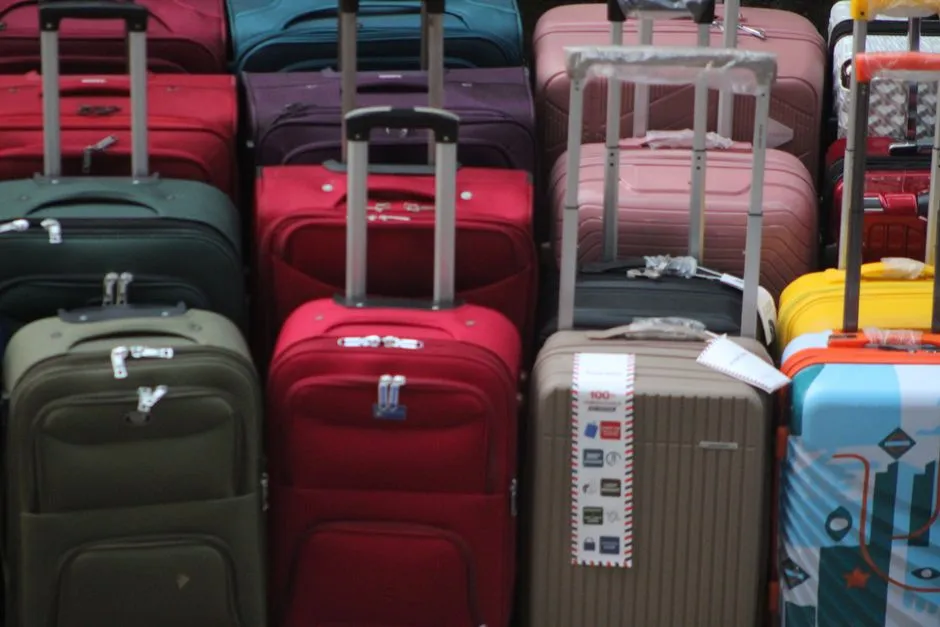
A carry-on bag is a larger piece of luggage designed to be stored in the overhead compartment. This bag is meant for items you do not need during the flight, such as bulkier clothing, shoes, toiletries, and extra gear. Standard carry-ons include rolling suitcases, larger travel backpacks, and duffel bags. Because overhead bin space is shared among all passengers, these bags are subject to much stricter size and weight audits by gate agents before boarding.
Dimensions and Weight Limits Compared
While general rules of thumb exist, airline-specific dimensions vary. A bag that passes as a personal item on a legacy domestic carrier might be flagged as a full-sized carry-on on an ultra-low-cost European or Asian carrier. Understanding these specific thresholds is vital for stress-free travel.
Standard Personal Item Dimensions
For most major domestic airlines in the United States (such as Delta, United, and American Airlines), the standard dimension limit for a personal item is approximately 18 x 14 x 8 inches (45 x 35 x 20 cm). However, budget carriers like Spirit or Frontier enforce slightly smaller limits, often 18 x 14 x 8 inches strictly enforced with physical measuring sizers at the gate. European budget airlines like Ryanair are even more restrictive, permitting only 40 x 20 x 25 cm (approximately 15.7 x 7.8 x 9.8 inches).
Standard Carry-On Dimensions
The standard domestic carry-on size is 22 x 14 x 9 inches (56 x 36 x 23 cm), which includes the wheels and handles. It is a common mistake to measure only the fabric body of a suitcase; gate agents use metal sizers that measure the absolute outermost edges. Globally, international carriers often restrict carry-on sizes slightly further, sometimes limiting width or depth to accommodate smaller regional aircraft cabins.
Weight Restrictions: Domestic vs. International
In the United States, major legacy carriers rarely weigh carry-on bags, provided you can lift the bag into the overhead bin unaided. However, international carriers and domestic budget airlines are notorious for weighing cabin baggage. The standard weight limit for an international carry-on is often 7 kilograms (15.4 pounds) or 10 kilograms (22 pounds). This weight limit frequently includes the combined weight of both your personal item and your carry-on bag.
The Ultimate Cabin Baggage Comparison Table
To help visualize how these two classes of baggage compare across practical travel scenarios, refer to the comparison table below.
| Baggage Type | Typical Max Dimensions | Standard Weight Limit | Storage Location | Best Suited For |
|---|---|---|---|---|
| Personal Item | 18 x 14 x 8 inches | Usually unweighted (or combined) | Under the seat in front | Electronics, travel documents, medication, snacks, 1-day essentials |
| Carry-On Bag | 22 x 14 x 9 inches | 7kg - 15kg (15lbs - 33lbs) | Overhead compartment | Bulkier clothing, shoes, outerwear, full toiletry kits, gear |
NEW — AI Snap & Check: photograph your packed bag and OneBag's AI instantly ticks off your items and warns you about missing essentials (passport, wallet, charger). Plus smart carry-on lists for your exact trip and bag-weight tracking for 80+ airlines — so you never forget a thing or pay an overweight fee.
How to Choose the Right Bags
Selecting the right luggage hardware is the foundation of efficient packing. The wrong bag structure can waste valuable space or add unnecessary empty weight before you even pack a single t-shirt.
Selecting the Perfect Personal Item
When shopping for a personal item, look for bags that maximize rectangular volume. Round duffels or teardrop-shaped backpacks leave empty, unusable corners in airline sizers.
The Underseat Backpack
A dedicated travel backpack designed with a clamshell opening (opening flat like a suitcase) is the most efficient personal item. Look for capacities between 20 to 28 liters. Ensure it has a dedicated, padded external laptop sleeve so you can remove your computer at airport security without rummaging through your main compartment.
The Weekender Duffel
A soft-sided duffel bag with a trolley sleeve (a strap that slides over your rolling suitcase handle) is an excellent secondary bag. Because it is soft-sided, it can be easily compressed to fit into tight underseat spaces even if slightly overpacked.
Choosing the Right Carry-On
The debate between hardside and softside, or rolling wheels versus backpack straps, depends heavily on your travel style and destination.
Hardside vs. Softside
Hardside suitcases offer superior protection for fragile items and prevent you from overpacking the bag past its physical depth limits. However, they lack external pockets. Softside suitcases feature exterior pockets for quick-access items and offer slight flexibility to squeeze into tight overhead compartments, but they can easily bulge past legal limits if stuffed carelessly.
Two-Wheel vs. Four-Wheel (Spinners)
Four-wheel spinner bags roll effortlessly on smooth airport floors but perform poorly on cobblestones, carpet, or gravel. Spinners also lose 1 to 2 inches of packable height because the wheels protrude further from the bag's base. Two-wheel (rollaboard) suitcases utilize recessed wheels, providing more internal packing volume and better durability over rough terrain.
Strategic Packing: What Goes Where?
A common mistake is packing items randomly across both bags. If the airline forces you to gate-check your carry-on bag due to a full flight, you must be prepared to instantly hand over that bag without losing critical valuables or medication.
The Personal Item: Your In-Flight Survival Kit
Your personal item should be packed under the assumption that your carry-on bag might be taken from you at the jet bridge. It should contain your absolute essentials, high-value electronics, and entertainment for the flight.
What to Pack in Your Personal Item:
- Valuables & Documents: Passport, boarding passes, wallet, keys, and physical currency.
- Electronics: Laptop, tablet, e-reader, noise-canceling headphones, and a portable power bank (lithium-ion batteries are legally required to be in the cabin and cannot be checked).
- Medication & Toiletries: Prescriptions, daily medications, lip balm, hand sanitizer, and a toothbrush.
- Comfort Items: An inflatable neck pillow, sleep mask, and a light jacket or sweater (wear this during boarding to save space).
- Emergency Outfit: One change of underwear and a clean t-shirt in case your carry-on is delayed.
The Carry-On: Your Mobile Wardrobe
Your carry-on bag should hold the bulk of your clothing, secondary footwear, and larger toiletry items that comply with local liquid restrictions.
What to Pack in Your Carry-On:
- Clothing: Pants, shirts, underwear, and socks organized using compression packing cubes.
- Footwear: Packed in shoe bags to keep dirt away from your clean clothes. Always wear your heaviest shoes (like boots or sneakers) on the plane.
- Primary Toiletries: Your clear, quart-sized liquids bag (conforming to the TSA 3-1-1 rule) placed at the very top of the bag for easy retrieval at security check-points.
- Utility Gear: Travel adapters, chargers, tripods, or specialized gear.
How to Maximize Your Packing Space
To fit a week's worth of travel gear into a personal item and a carry-on, you must abandon traditional folding methods and embrace spatial optimization techniques.
The Power of Compression Packing Cubes
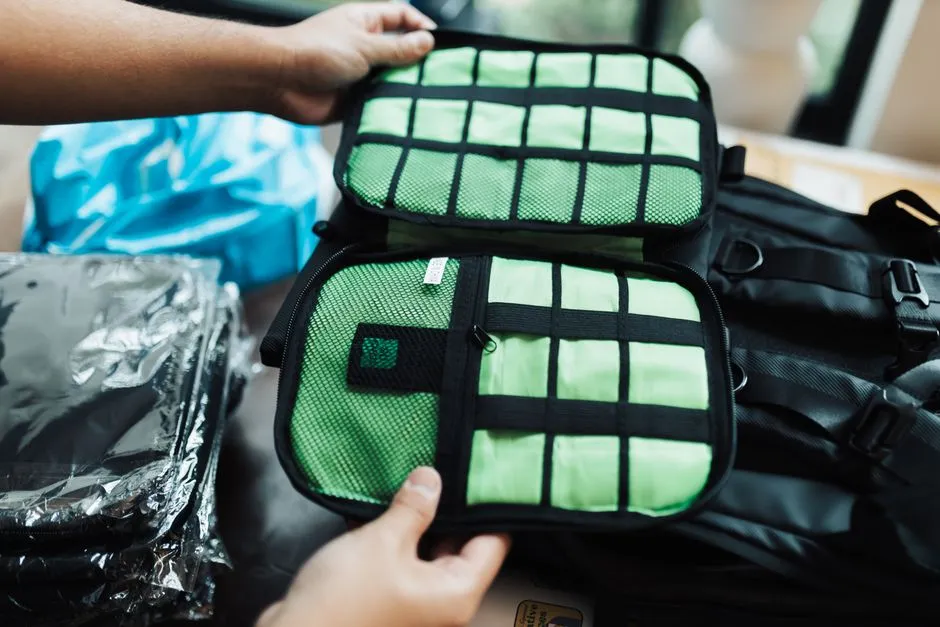
Packing cubes do not actually reduce the weight of your clothes, but they revolutionize organization and volume. Compression cubes use a secondary zipper system to squeeze excess air out of your folded or rolled garments, reducing their volume by up to 40%. Group your clothing by category (e.g., tops in one cube, bottoms in another) to make unpacking at your destination effortless.
The Ranger Roll Method
Instead of folding clothes flat, use the "Ranger Roll" technique. This military folding method involves folding garments into tight, self-contained cylinders. Not only does this minimize wrinkles, but it also allows you to pack clothes vertically inside your packing cubes, making every item visible at a glance without disturbing the rest of the stack.
The "Wear Your Heavy Gear" Rule
The simplest way to free up space in your luggage is to wear your bulkiest items during transit. Wear your heavy winter coat, hiking boots, sweaters, and hats onto the plane. Once you board the aircraft, you can remove your jacket and place it in the overhead bin on top of your suitcase, or use it as an extra pillow.
Common Mistakes to Avoid
Even experienced travelers fall into common traps when relying solely on cabin baggage. Avoid these frequent missteps to ensure a smooth journey:
- Measuring your bag when empty: A suitcase might measure exactly 22 x 14 x 9 inches when empty, but packing it to the brim causes the fabric to bulge outward, adding 2 to 3 inches of depth that will fail the airport gate sizer. Always measure your bag *after* it is fully packed.
- Forgetting to include wheels and handles: Many luggage manufacturers advertise "body dimensions" rather than "overall dimensions." Ensure your measurements include the spinner wheels, top carry handle, and side handles.
- Packing liquids incorrectly: The TSA 3-1-1 liquids rule (liquids must be 3.4oz/100ml or less, inside a single 1-quart clear bag) is strictly enforced globally. Do not scatter liquid items throughout your bags; keep them centralized and easily accessible.
- Assuming all airlines share the same rules: Never assume that because your bag was allowed on a Delta flight, it will be permitted on a Ryanair or EasyJet flight. Always check the specific carrier's baggage dimension page before packing.
- Overpacking the personal item: Squeezing a massive backpack under the seat might work on boarding, but it leaves zero legroom, making your flight incredibly uncomfortable and potentially blocking emergency egress.
Frequently Asked Questions
Can I bring a backpack and a carry-on?
Yes, on most standard airlines, you can bring both a backpack and a carry-on suitcase. However, the backpack must meet the smaller "personal item" dimensions and fit completely under the seat in front of you, while the suitcase goes in the overhead bin. If you are flying on a basic economy ticket on airlines like United, Spirit, or JetBlue, your ticket may restrict you to the personal item (backpack) only.
What happens if my carry-on is too big?
If your carry-on bag exceeds the dimensions or weight limits allowed by the airline, gate agents will require you to gate-check the bag. This means your bag will be placed in the cargo hold for the duration of the flight. On budget airlines, this almost always incurs a steep gate-check fee, which is significantly higher than pre-paying for a checked bag online. You will also have to wait at the baggage carousel at your destination to retrieve it.
Are ladies' purses considered a personal item?
Yes, any purse, handbag, clutch, or small satchel is considered a personal item. If you bring a purse *and* a laptop bag, you have brought two personal items, which violates the "one personal item and one carry-on" limit. To avoid issues during boarding, consolidate your smaller purse inside your larger backpack or carry-on bag before reaching the boarding gate.
Do diaper bags count as a personal item?
On most major airlines, diaper bags do not count toward your personal item limit if you are traveling with an infant. Many airlines allow parents to bring a diaper bag, a stroller, or a car seat free of charge in addition to their standard personal item and carry-on allowance. Always verify the specific family travel policy of your airline before arriving at the airport.
Does a jacket count as a personal item?
No, wearable clothing items such as winter coats, jackets, hats, and scarves do not count toward your personal baggage allowance. You can wear them through security and onto the plane. Additionally, items like umbrellas, duty-free shopping bags (within reason), and assistive medical devices (such as CPAP machines or crutches) do not count against your bag limits under FAA regulations.
Can I put my personal item in the overhead bin?
While overhead bins are technically designed for larger carry-on bags, you can place your personal item there if there is ample space after all passengers have boarded. However, flight attendants frequently request that passengers with both a carry-on and a personal item keep the smaller bag under the seat to ensure there is enough overhead space for everyone's larger luggage. On crowded flights, this rule is strictly enforced.
By understanding the exact parameters of a personal item vs carry-on, you gain complete control over your travel experience. You save money on unnecessary baggage fees, bypass the stressful lines at the baggage carousel, and move through transit hubs with speed and agility. Pack smart, measure your gear ahead of time, and enjoy the freedom of traveling light.

Independent Full Stack Developer · Founder of Tabserve
Aycan builds and maintains Tabserve's apps — OneBag, Routevia and RentFlow — and writes practical, tested guides to help you pack smarter, travel better and manage rentals with less hassle.